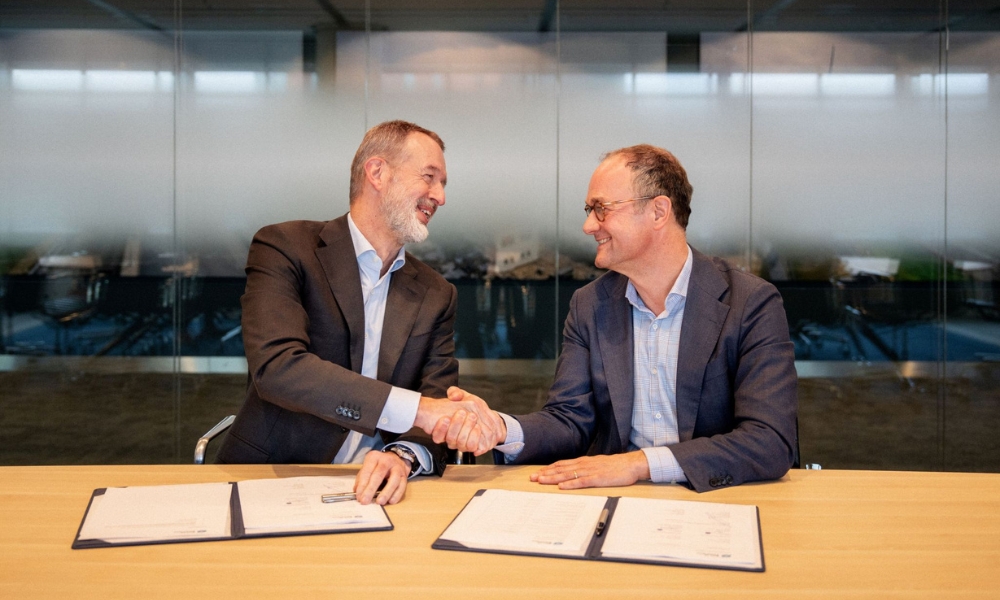
Mitsui OSK Lines (MOL) on Friday (9 January) announced the signing of a memorandum of understanding (MOU) for a strategic partnership with ITOCHU Corporation (ITOCHU) to advance decarbonisation in the transportation sector through the use of Environmental Attribute Certificates (EACs).
Through this MOU, both companies will collaborate in marketing, public relations, sales, and other areas to promote the adoption of EACs, helping companies using transportation services reduce their Scope 3 emissions.
By forming a cross-industry partnership between shipping and aviation, this initiative represents a new model for decarbonisation in Japan.
As part of this initiative, both companies, in their capacity as users of maritime and air transport, have engaged in mutual trading of EACs to reduce their respective Scope 3 emissions as follows:
- MOL purchased “air transport (air travel and freight)” EACs issued by ITOCHU to reduce GHG emissions associated with its employee air travel (Scope 3 Category 6).
- ITOCHU purchased “maritime transport (sea freight)” EACs issued by MOL to reduce GHG emissions associated with its use of maritime transport (Scope 3 Category 4).
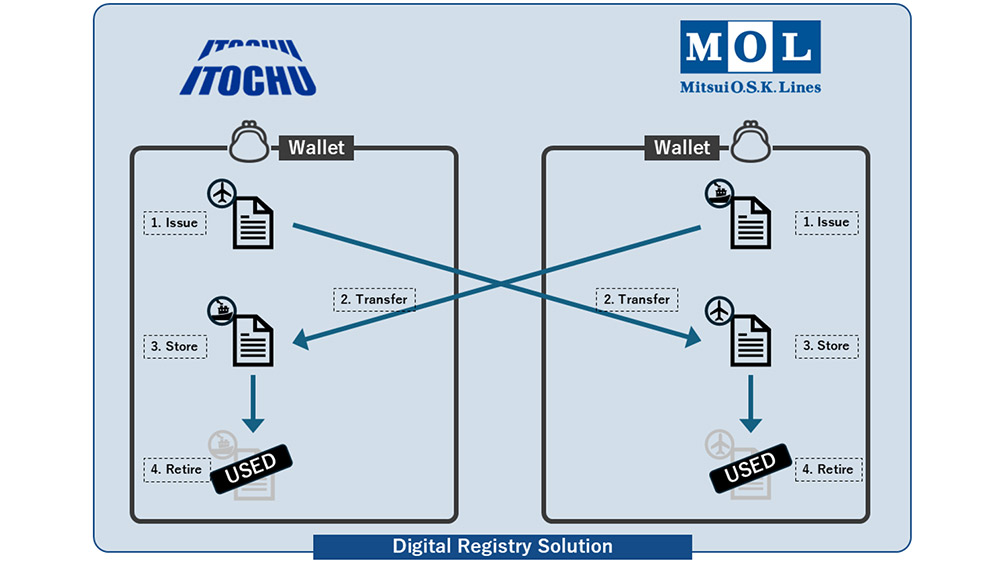
This transaction was executed through the platform provided by 123Carbon in the Netherlands. Operating under a robust audit framework, the platform centrally manages the issuance, transfer, storage, and retirement of EACs. It ensures traceability and reliability of transactions while maintaining high transparency in accordance with global standards.
MOL said reducing Scope 3 emissions-which represent a significant share for many companies- is an unavoidable challenge in advancing climate change response.
One of key barriers is the difficulty of ensuring traceability, given the complexity of supply chains. MOL will leverage its strengths in marine transport through the use of low-carbon marine fuels, while ITOCHU will draw on its expertise in adopting sustainable aviation fuel (SAF).
Through this collaborative effort in the shipping and aviation sectors, the two companies will establish a framework to support transportation service users in reducing their Scope 3 emissions. Together, they are committed to advancing decarbonization across the broader transportation supply chain through this partnership.
Photo credit: Mitsui OSK Lines
Published: 12 January, 2026