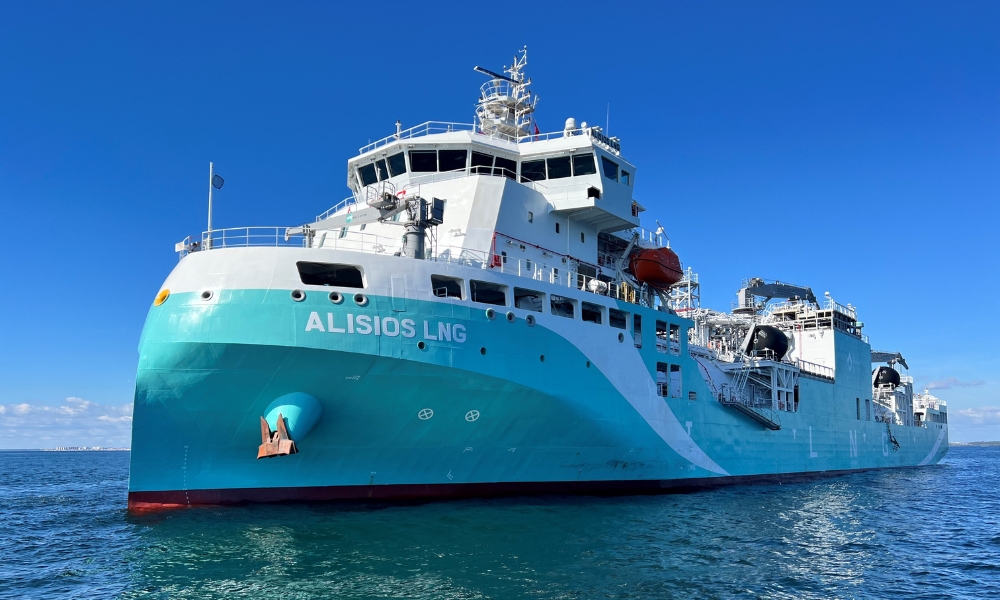
China’s first domestically developed methanol-powered river-sea direct vessel, successfully completed its maiden voyage on 20 February, according to the Ningbo Area of China (Zhejiang) Pilot Free Trade Zone on Tuesday (24 February).
The vessel, Chuang Xin 19, departed from the Beilun Ore Terminal in the Ningbo Area of the China (Zhejiang) Pilot Free Trade Zone, carrying 11,000 metric tonnes (mt) of iron ore bound for Jiangyin, Jiangsu Province.
“This maiden voyage marks a significant milestone in the green transformation of river-sea intermodal transport in the Yangtze River Delta and the Yangtze River Economic Belt,”said China (Zhejiang) Pilot Free Trade Zone.
The Chuang Xin 19 vessel is 126.6 metres long, 22.6 metres wide, and has a gross tonnage of 9,614 tonnes.
The key to its successful maiden voyage lies in its domestically developed CS8L21M methanol-fuelled medium-speed engine.
This engine employs advanced methanol direct injection technology, achieving a methanol substitution rate exceeding 90%, providing core equipment support for the development of methanol-powered ships in China.
Methanol fuel, with its advantages of being environmentally friendly, economical, and easy to store and transport, has become an important alternative fuel for ships. However, its large-scale application has long faced technical challenges.
To address this, the Ningbo Maritime Safety Administration established a special working group for methanol-fuelled vessels and implemented multiple measures to ensure the smooth implementation of the maiden voyage.
The working group collaborated with relevant units involved in ship design, construction, and inspection to accurately assess the risks of methanol fuel power systems and assist companies in improving prevention and control measures.
Photo credit: China (Zhejiang) Pilot Free Trade Zone
Published: 26 February, 2026