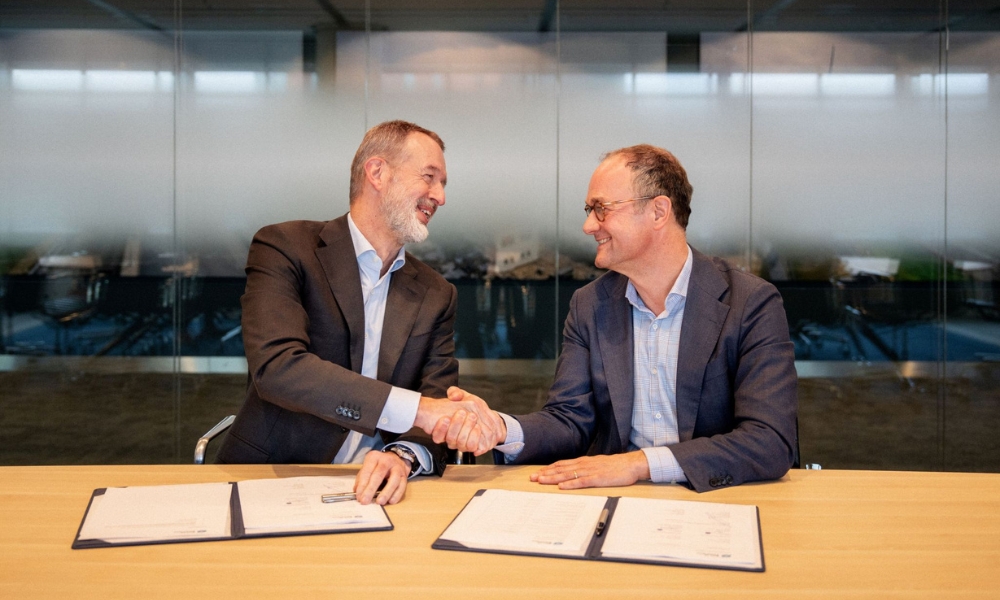
The Global Centre for Maritime Decarbonisation (GCMD) on Monday (19 January) released its latest report, presenting a detailed operational risk assessment for ship-to-ship (STS) transfer of ammonia in Singapore’s port waters.
Building on its earlier foundational work, the study deepens understanding of the conditions for safe ammonia bunkering in a high-traffic port environment.
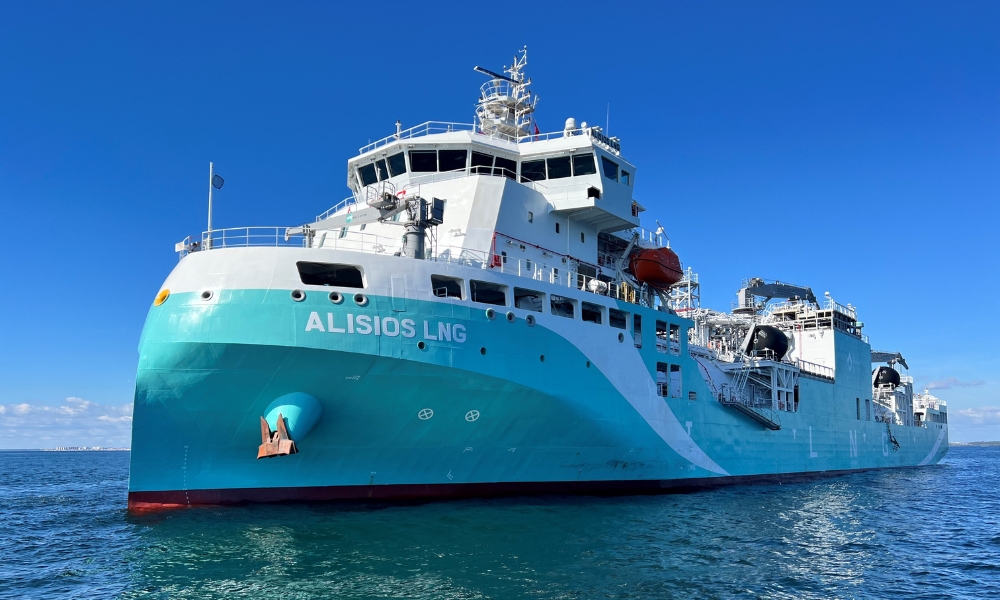
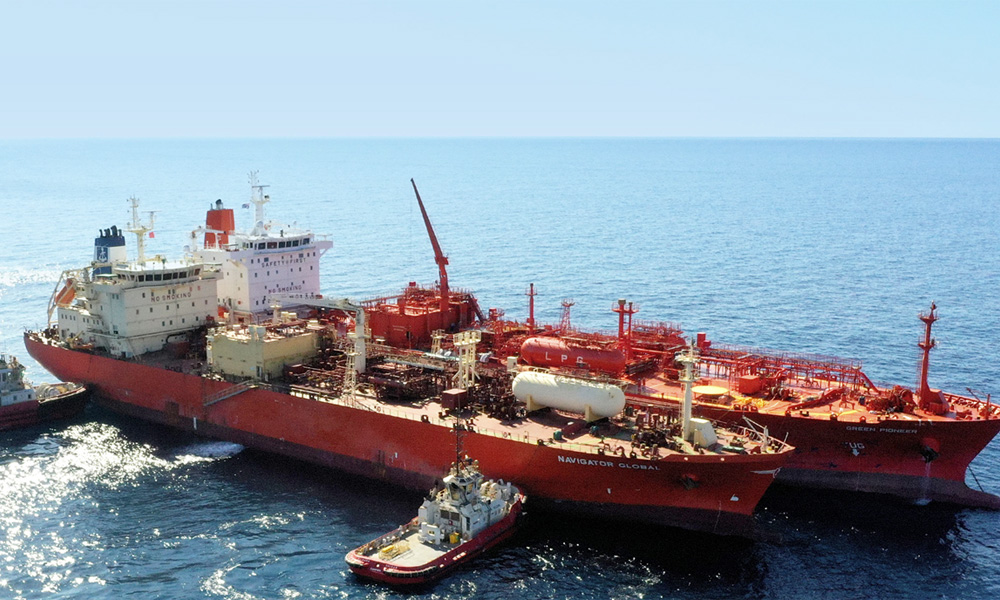
This report, representing Phase 2 of GCMD’s ammonia bunkering work in Singapore, focused specifically on STS transfers using existing ammonia carriers — ahead of the availability of dedicated ammonia bunker vessels.
Consistent with earlier findings, this Phase 2 study showed that ammonia transfer operations are technically and operationally feasible in Singapore’s port waters, provided guidelines on robust safeguards, risk assessments, and strong cross-industry coordination are in place.
Key findings from the safety assessments:
- Transit and side-by-side mooring of two ammonia carriers can be safely managed under local weather and sea-state limits, supported by conservative operating criteria and continuous pilotage.
- HAZID and HAZOP studies identified medium-level risks primarily related to vessel interface, mooring, equipment and procedures — all of which were deemed tolerable with appropriate safeguards, checklists and emergency planning.
- Quantitative risk assessment demonstrated that safety zones can be established, with deterministic modelling recommending a conservative safety zone having a radius of 547 m for once-a-year transfers.
- CFD modelling of worst-case release scenarios revealed the formation of toxic clouds that could compromise escape routes and accommodation intakes, reinforcing the importance of robust detection systems, rapid isolation measures and effective crew protection.
GCMD added these findings have already contributed to emerging industry guidance, including the SGMF’s ammonia bunkering guidelines, and are helping to prepare the broader industry to adopt ammonia as a marine fuel.
Note: The report can be found here.
Photo credit: Global Centre for Maritime Decarbonisation
Published: 20 January, 2026