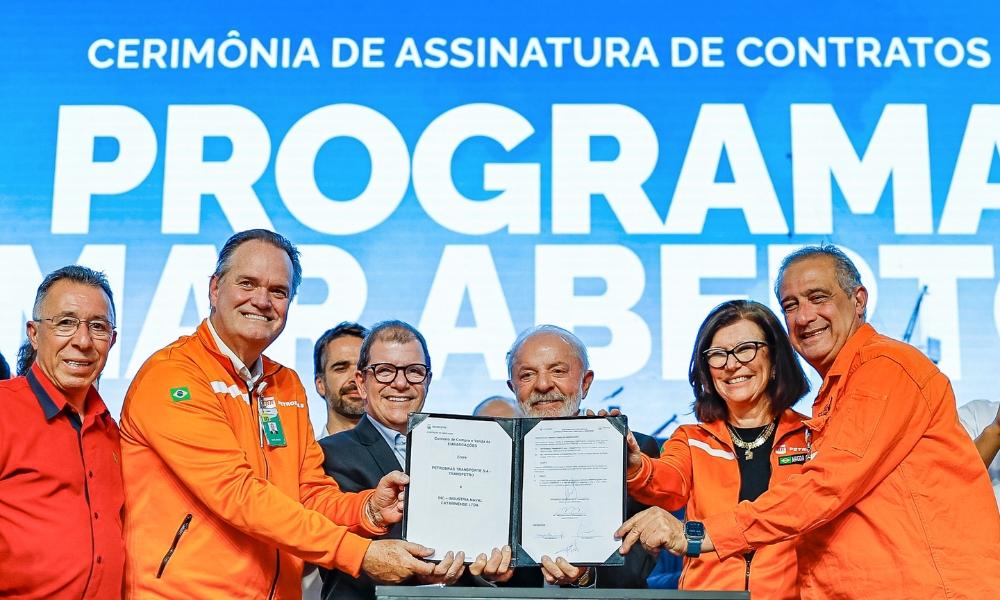
Brazilian state-controlled oil and gas producer Petrobras and its logistics subsidiary Transpetro on Monday (19 February) said they signed contracts with shipyards for five gas carriers, as well as 18 barges and 18 pushboats, with a total investment of BRL 2.8 billion (USD520 million).
The construction of vessels will be under the Mar Aberto Program, an initiative aimed at renewing and expanding the fleet of the Petrobras System.
For the acquisition of 18 barges and 18 pushboats, the order, representing an investment of BRL 620.6 million, marked Transpetro’s entry into inland navigation (sheltered or partially sheltered waters, such as rivers, lakes, channels, bays, and lagoons), consolidating the company as one of the leading operators in the transportation of petroleum derivatives and biofuels in the inland waterway mode.
The new business model will enable the vertical integration of bunkering operations, allowing Transpetro to have its own fleet for fueling at strategic hubs such as Belém (PA), Rio de Janeiro (RJ), Santos (SP), Paranaguá (PR), and Rio Grande (RS). This integration ensures greater operational control, cost optimization, and gains in logistical efficiency.
Two national shipyards were selected as winners of the bidding process. The Bertolini Construção Naval da Amazônia shipyard, based in Manaus (AM), will be responsible for building the 18 barges, with delivery of the first unit scheduled for three months after the start of construction. Of the total contracted, ten will have a deadweight capacity of 3,000 tons (DWT) and eight will have 2,000 DWT.
The Indústria Naval Catarinense shipyard, located in Navegantes (SC), will build the 18 pushboats, with initial delivery scheduled for 10 months after the start of manufacturing.
“The Petrobras System is always ready to support Brazil’s development. With these contracts, we are preparing Petrobras for the growth of our production in the coming years and leveraging the recovery of the national shipbuilding industry. For us, when Petrobras is stronger, Brazil is also stronger,” said Magda Chambriard, President of Petrobras.
Photo credit: Petrobras
Published: 22 January, 2026