Industry coalition SEA-LNG on Tuesday (20 January) published its annual ‘View from the Bridge’ report, highlighting 2025 as a year of strong growth in LNG, liquefied biomethane (LBM/bio-LNG) and e-methane emissions reductions, costs and availability.
This year’s report “The Journey” highlights a decade of progress towards a cleaner future powered by over USD 150 billions of investment to increase the use of LNG (methane) as a marine fuel.
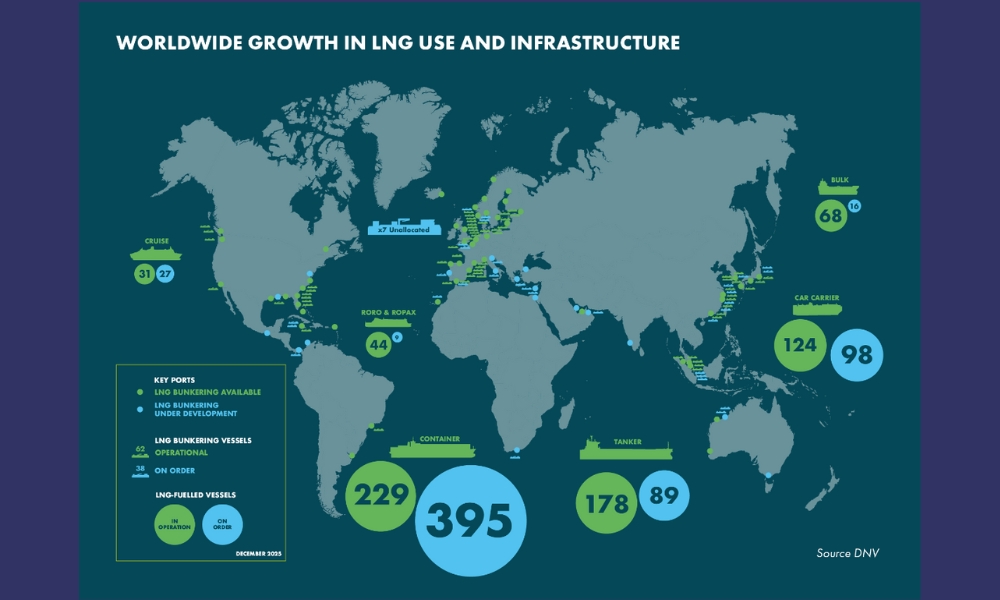
With LNG powered vessels ordered in 2025 accounting for 79% of alternative-fuelled tonnage, up from 67% in 2024, the LNG-powered global fleet both operating and on-order, including LNG carriers, today represents 10% of the global fleet by dead weight tonnage.
From a niche solution used by vessels in Northern Europe in 2016, today, LNG is a globally utilised mainstream marine fuel. Its energy density, availability, lower costs of regulatory compliance and commercial optionality give it an advantage over other alternative marine fuels.
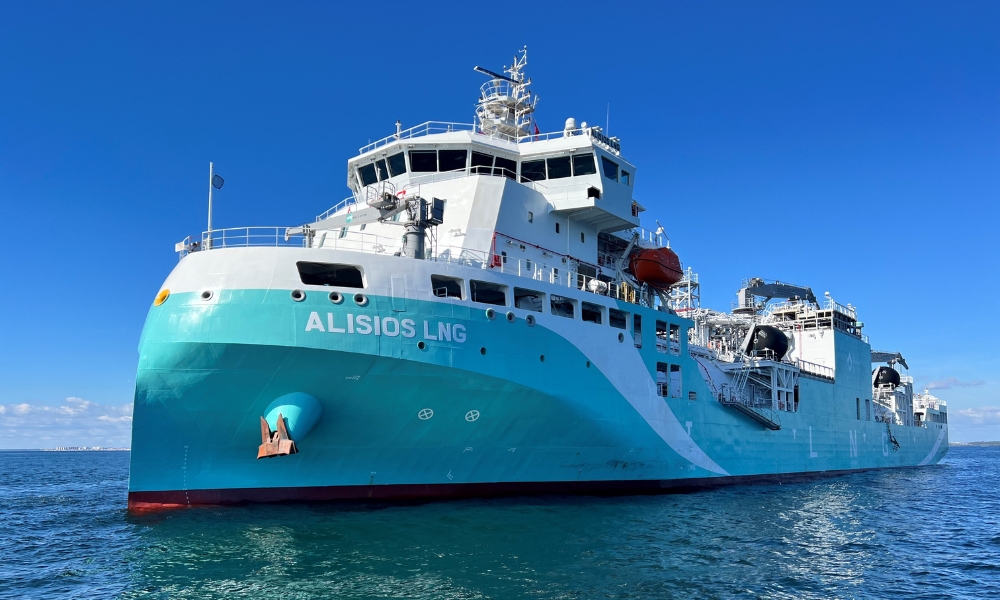
LNG bunkering is now offered in 222 ports globally. The number of bunkering vessels has increased from a single vessel in 2016 to over 62 in 2025 with a strong order book of 38. The report also highlights rapid developments in LBM, with new research mapping biomethane bunkering availability, as well as the nascent supply of e-methane.
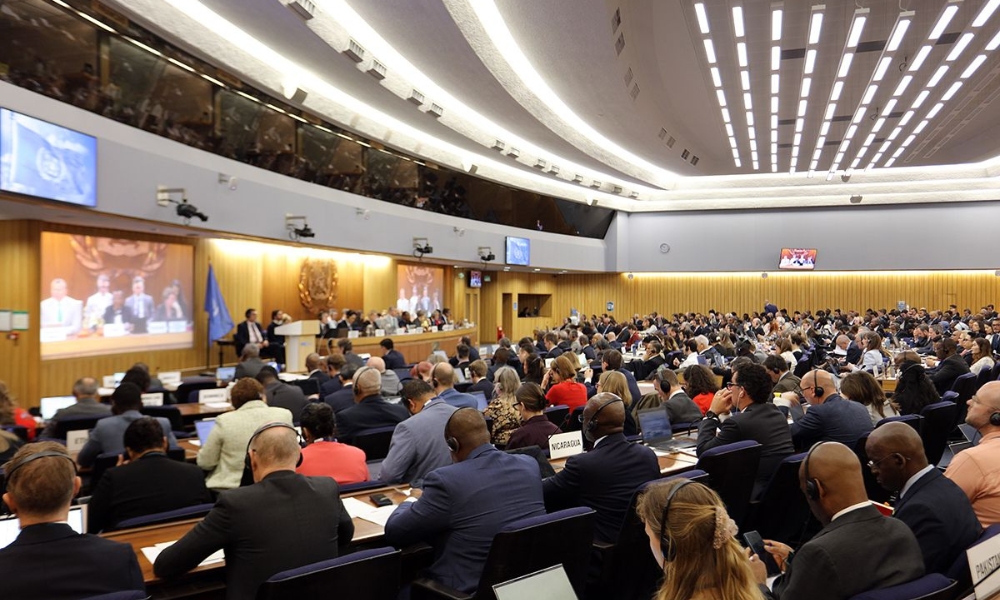
The ‘View from the Bridge’ sets out the tenets of technology-neutral global regulations that would balance commerciality and sustainability. It calls for a global regulatory system that rewards clean fuel supply chains, protects first movers and is practical and realistic considering the global maritime industry.
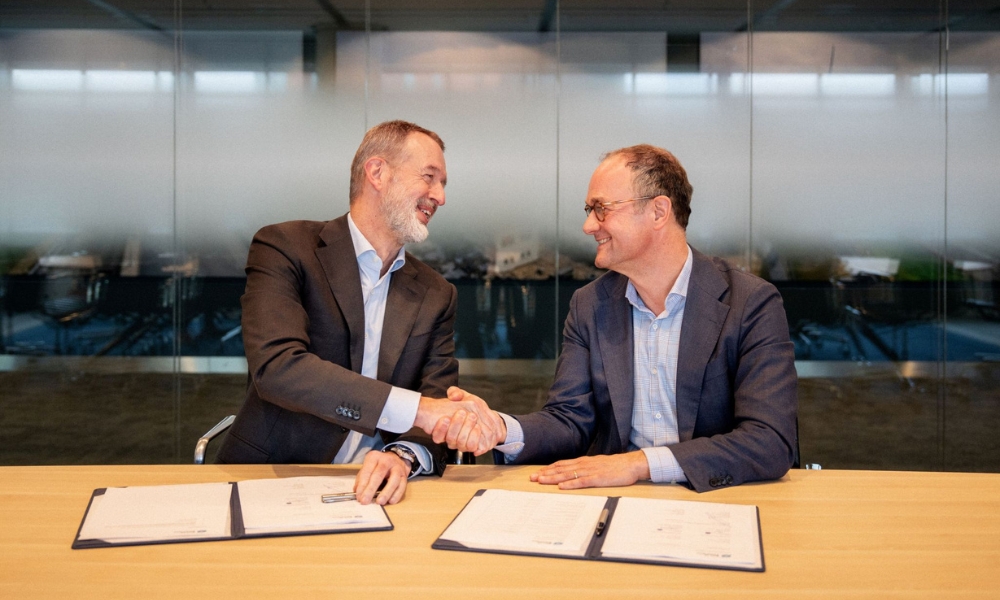
Peter Keller, Chairman of SEA-LNG, said: “After a year of regulatory drama exposing the complexity of the task faced by the IMO, the need for a single global decarbonisation framework is greater than ever. This framework must be goal-based and technology-neutral.
“It must allow some flexibility so companies can plan their fleet modernisation. We need a framework which is practical and realistic, incentivising solutions that are scalable and investable.”
Steve Esau, COO of SEA-LNG, added: “2025 is the year the methane decarbonisation pathway became a clear runway. The year our advocacy for LNG as a transition fuel from fossil LNG through liquefied biomethane to liquefied e-methane took off, with record amounts of LBM powering global shipping today and growing strongly into the future.”
Ian Aitchison, SEA-LNG’s Communications Director, noted: “SEA-LNG’s messaging is built upon sound science, and the professional expertise and experience of the coalition’s members.
“So, despite the environmental and regulatory tumult experienced by the maritime industry, our voice has remained consistent over the last decade. In a world increasingly filled with AI content, being a credible and trusted advocate for a cleaner future is more important than ever.”
Photo credit: SEA-LNG
Published: 20 January, 2026