Singapore posted record port performance in 2025, supported by resilient global trade and fuel offtake.
This was announced by Senior Minister of State for Law and Transport Mr Murali Pillai, who was the Guest-of-Honour at the annual Singapore Maritime Foundation New Year Conversations event on Tuesday (13 January).
Singapore achieved a record of 3.22 billion gross tonnage (GT) of vessel arrivals and 44.66 million Twenty-Foot Equivalent Units (TEUs) of container throughput in 2025 – a 3.5% and 8.6% increase from 2024, respectively.
Marine fuel sales also hit a new high at 56.77 million metric tonnes (mt), a 3.4% increase from 2024, with continued growth in the use of alternative marine fuels, which increased to 1.95 million mt in 2025 compared to 1.35 million mt in 2024.
Singapore was named the world’s leading container port in DNV-Menon’s inaugural Leading Container Ports of the World report, and recognised as the Best Global Seaport for the fourth time and the Best Seaport in Asia for the 37th time at the Asian Freight, Logistics and Supply Chain Awards in 2025.
Strengthening Readiness for a Multi-Fuel Future
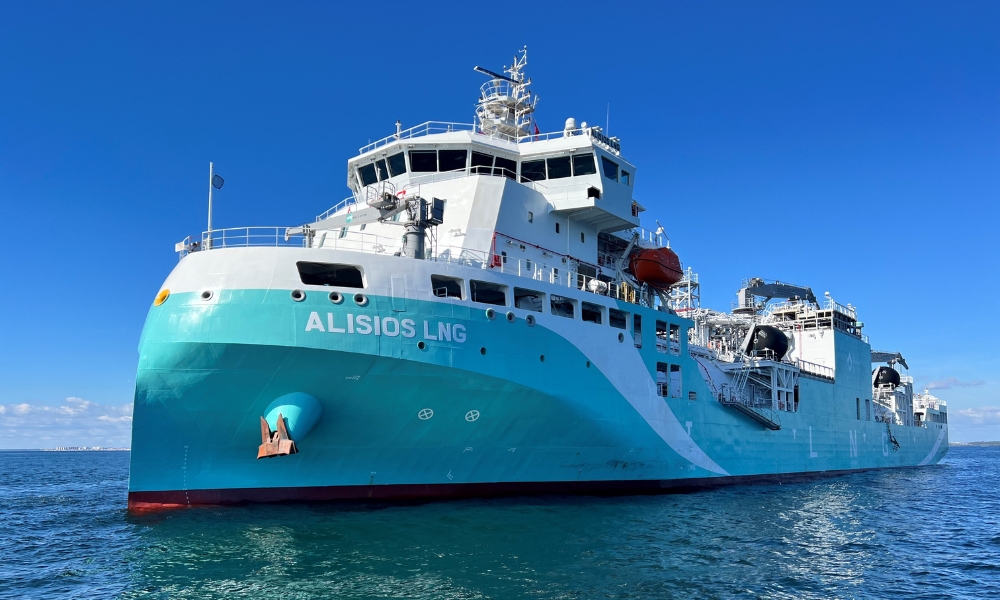
On 14 January 2026, MPA opened applications for new LNG bunker supply licences to better fulfil the growing demand on the industry. In parallel, the Standards for Port Limit LNG Bunker Vessels will be launched which will cover the equipment, operational performance, and efficiency of such vessels operating in Singapore to enhance safety.
MPA and Enterprise Singapore, through the Singapore Standards Council (SSC), will also be upgrading the existing Technical Reference for LNG Bunkering (TR56) to a Singapore Standard in Q2 2026, strengthening requirements for safe, transparent, and quality-assured LNG bunkering. They will also publish Singapore’s first Technical Reference for Ammonia Bunkering in Q2 2026, to guide safe and reliable operations, and support trials and early adoption.
In 2025, Singapore established two new Green and Digital Shipping Corridors (GDSCs) with India and the Republic of Korea respectively, and elevated the GDSC with China to the national level, bringing the total to nine.
These corridors aim to pilot solutions to enhance the resilience, efficiency and sustainability of global supply chains connecting through Singapore to our partners. Projects planned for 2026 include developing common emissions-reporting protocols, enhancing digital exchanges, and conducting fuel trials along participating routes.
Together with the appointment of a consortium led by Keppel Ltd in October 2025 to undertake front-end engineering design (FEED) studies for ammonia power generation and bunkering, and the award of three methanol bunkering licences in November 2025, these developments represent coordinated steps in readying Singapore as a multi-fuel bunkering hub.
Digital Bunkering Achieves 100% Adoption Rate
All bunker suppliers in Singapore have implemented digital bunkering as of August 2025. This initiative streamlines bunkering transactions and verifies electronic bunker delivery notes (e-BDNs) through an electronic bunker delivery notes enquiry facility. This has improved productivity and enhanced transparency in bunkering operations, saving up to 40,000 man-days annually in business process efforts.
Photo credit: Swapnil Bapat on Unsplash
Published: 14 January, 2026