Viking Line on Tuesday (3 February) said it is starting 2026 by renewing its offer of travel and transport powered by a high share of renewable European biogas.
After multiplying the use of biofuel tenfold last year, the Åland-based shipping company has now secured another year at the same ambitious level.
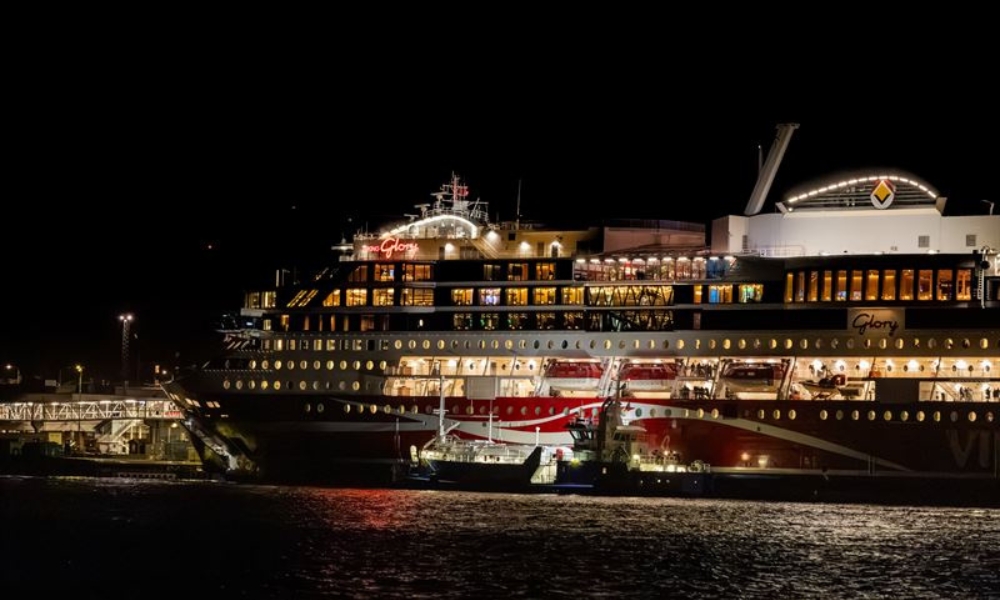
The biogas is used alongside liquefied natural gas on the company’s newest ships, Viking Glory and Viking Grace, which operate daily between Turku and Stockholm. This combination results in very low sulphur and particle emissions, as well as a greatly reduced climate footprint.
“Last year, our greenhouse gas emissions on Glory and Grace were reduced by nearly 50,000 tonnes. For the first half of 2026, we have secured 50 percent biogas to cover our fuel needs, and our ambition is to maintain a high level throughout the entire year,” said Dani Lindberg, Head of Sustainability at Viking Line.
By choosing Viking Lines vessels on the Turku – Stockholm route, passenger and freight customers influence the amount of biogas used in ship operations and thereby directly contribute to further emission reductions in the Baltic Sea.
Viking Line has been developing a green shipping corridor between Turku and Stockholm in cooperation with Ports of Stockholm and the Port of Turku. The objective is for the corridor to be completely fossil-free by 2035.
“Globally, there is no lack of initiatives to create fossil-free sea lanes, but most are still in the planning stages. Our investment in biogas and energy-efficient vessels is one of the clearest and largest-scale examples of how shipping can transition in practice,” said Marcus Risberg, CEO of Viking Line.
Photo credit: Viking Line
Published: 4 February, 2026