French testing, inspection and certification firm Bureau Veritas recently provided Singapore bunkering publication Manifold Times a copy of its VeriFuel Fuel Quality Testing Annual Report 2025 which provides an overview of marine fuel quality, emerging trends, and compliance levels based on all tested bunker samples across its laboratories. The following is a summary of the report:
Quality Trends and Comparisons:
2025 vs. Previous Years
This section provides a year-over-year comparison of fuel quality, trends, and compliance.
Residual Fuels
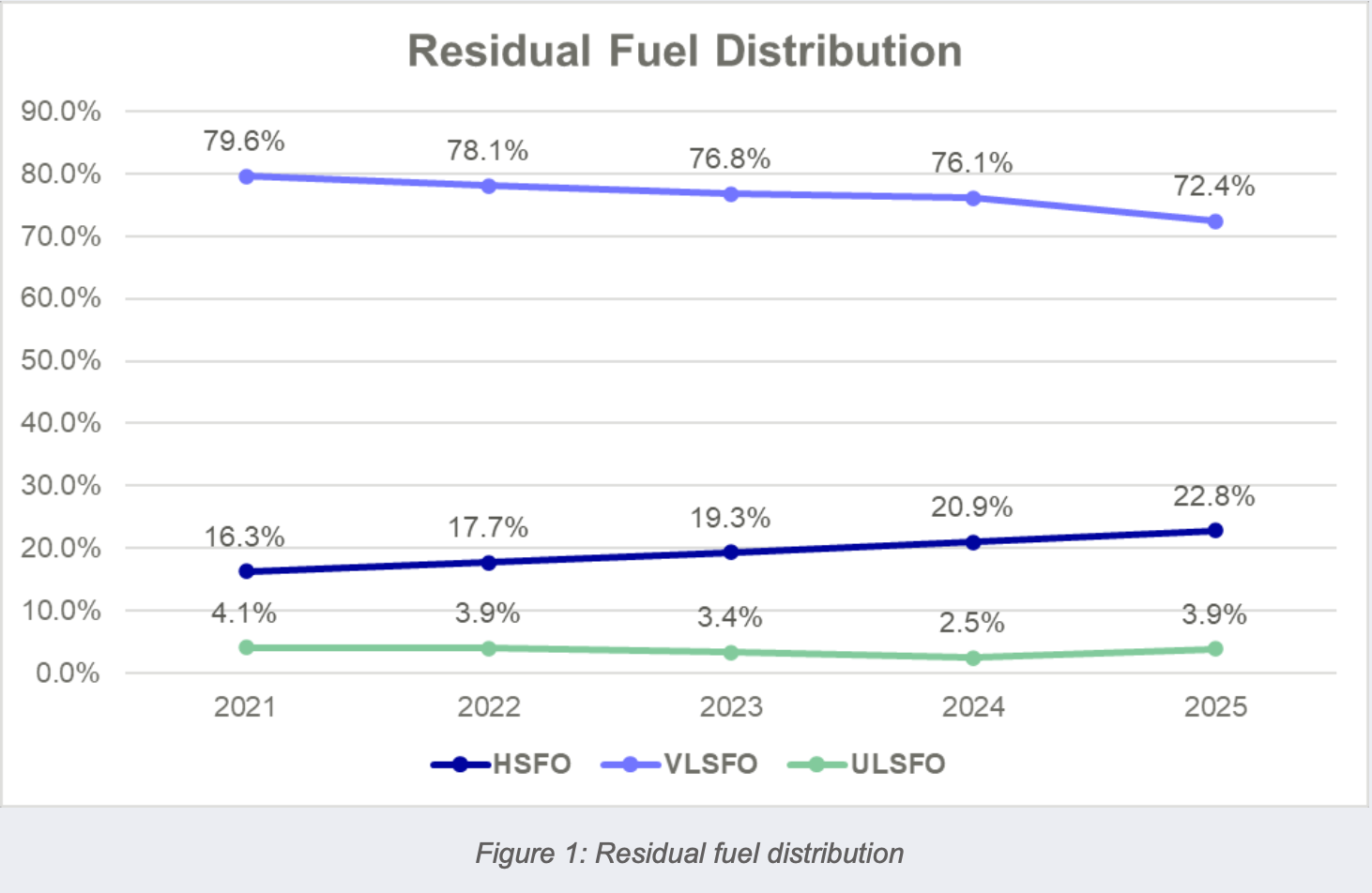
The proportion of HSFO deliveries continues its upward trend, while the introduction of MedECA impacts the demand for ULSFO, a trend that is expected to continue in the coming years. Consequently, the VLSFO proportion has further declined, whereas bio residual fuel deliveries represent 0.9% of the total [Figure 1].
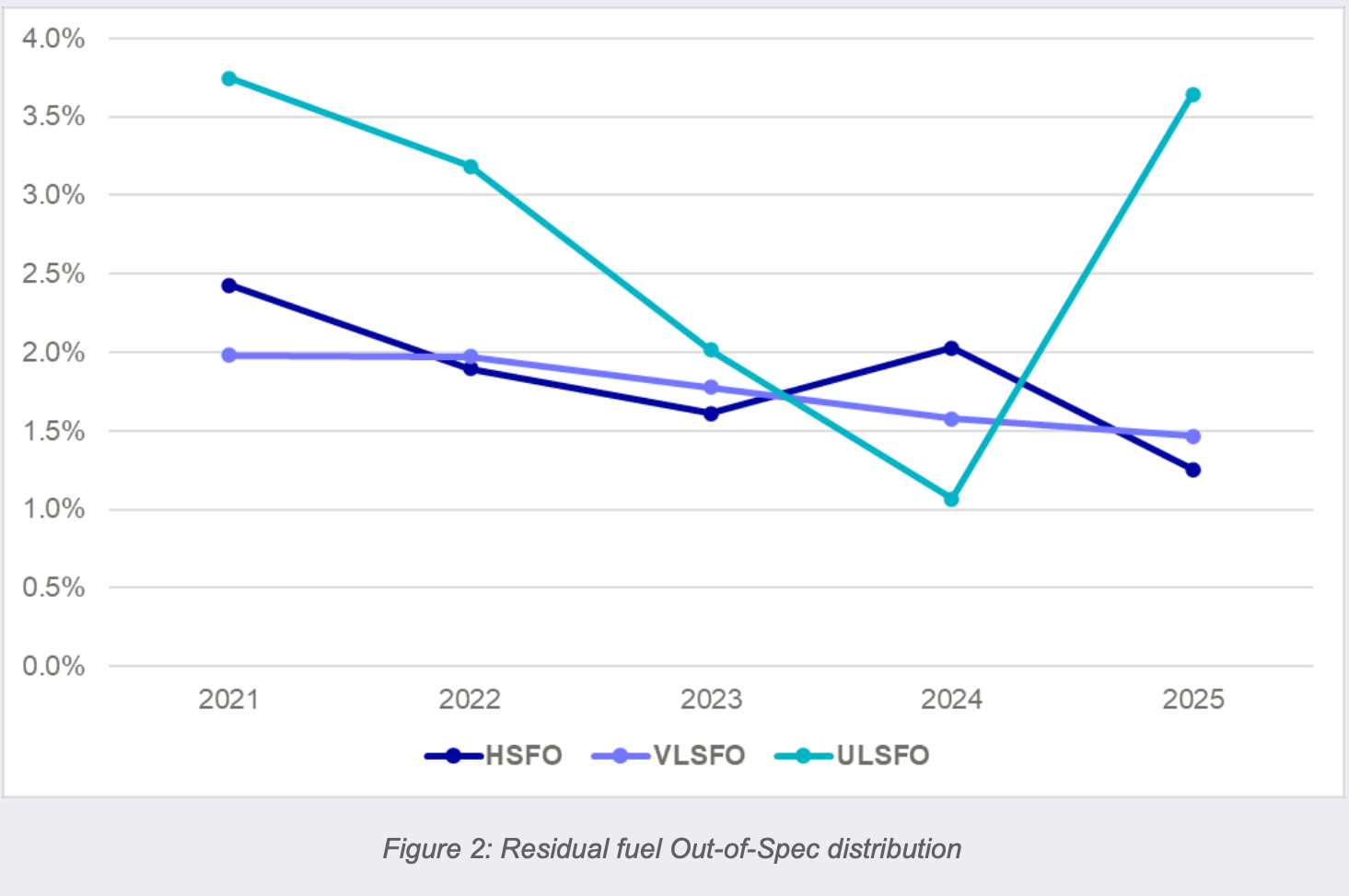
Comparison to specification [Figure 2]
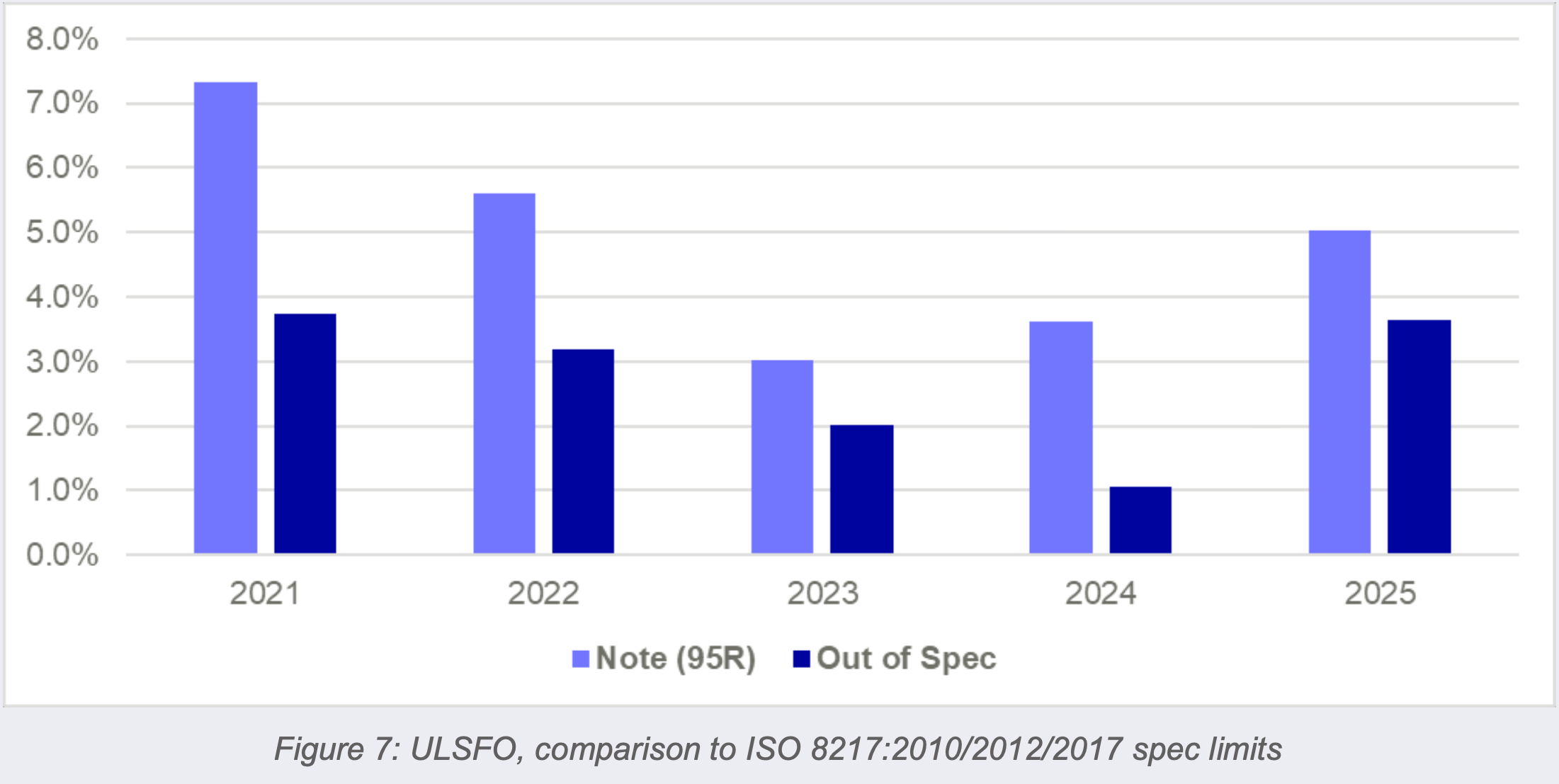
- ULSFO out-of-spec samples have significantly increased in 2025 compared to previous year, mainly due to sulphur and sediments.
- The number of VLSFO samples being out-of-spec has slightly decreased over the years.
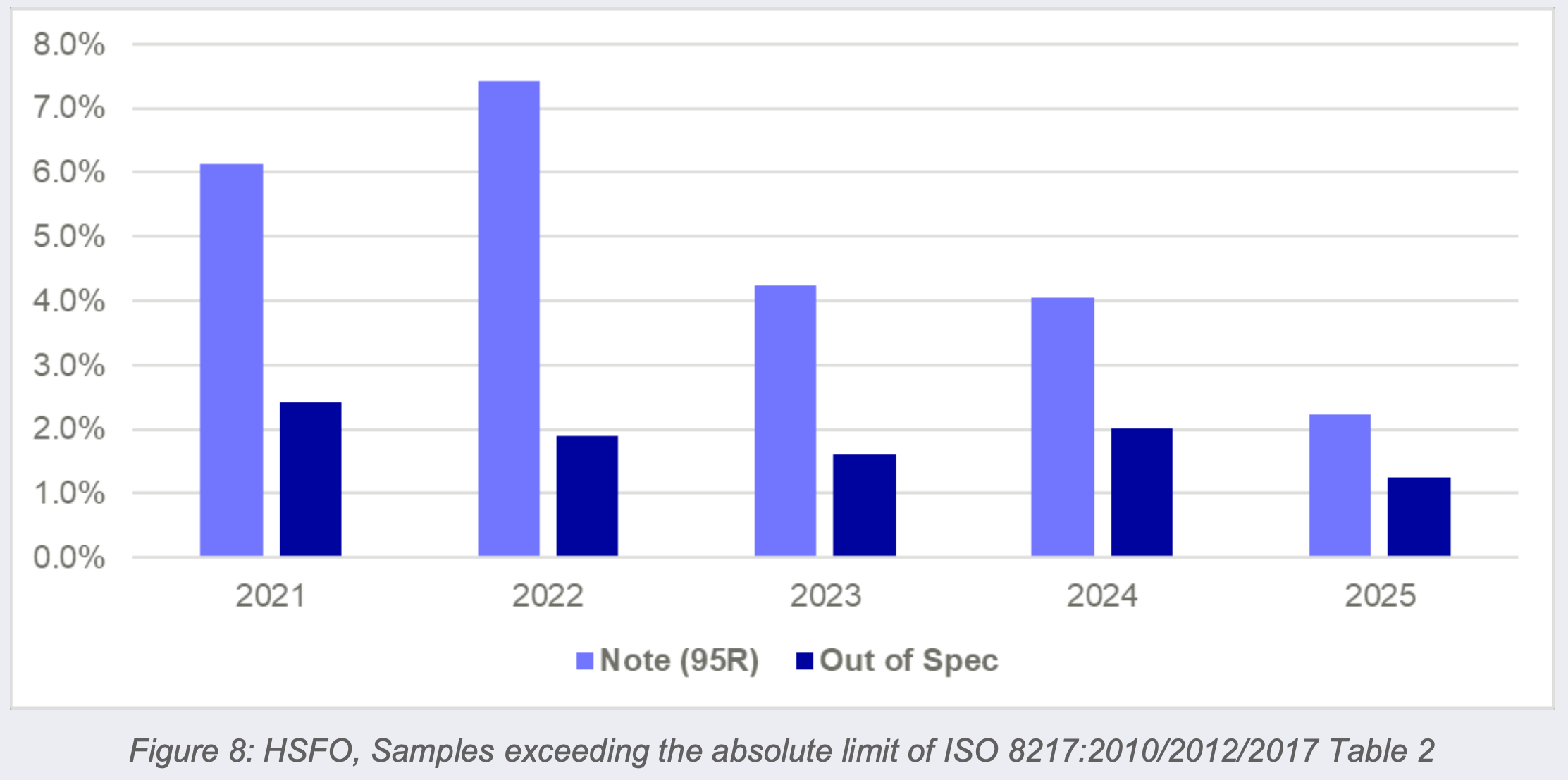
- HSFO out-of-spec samples decreased in 2025, mainly due to water content, viscosity and density.
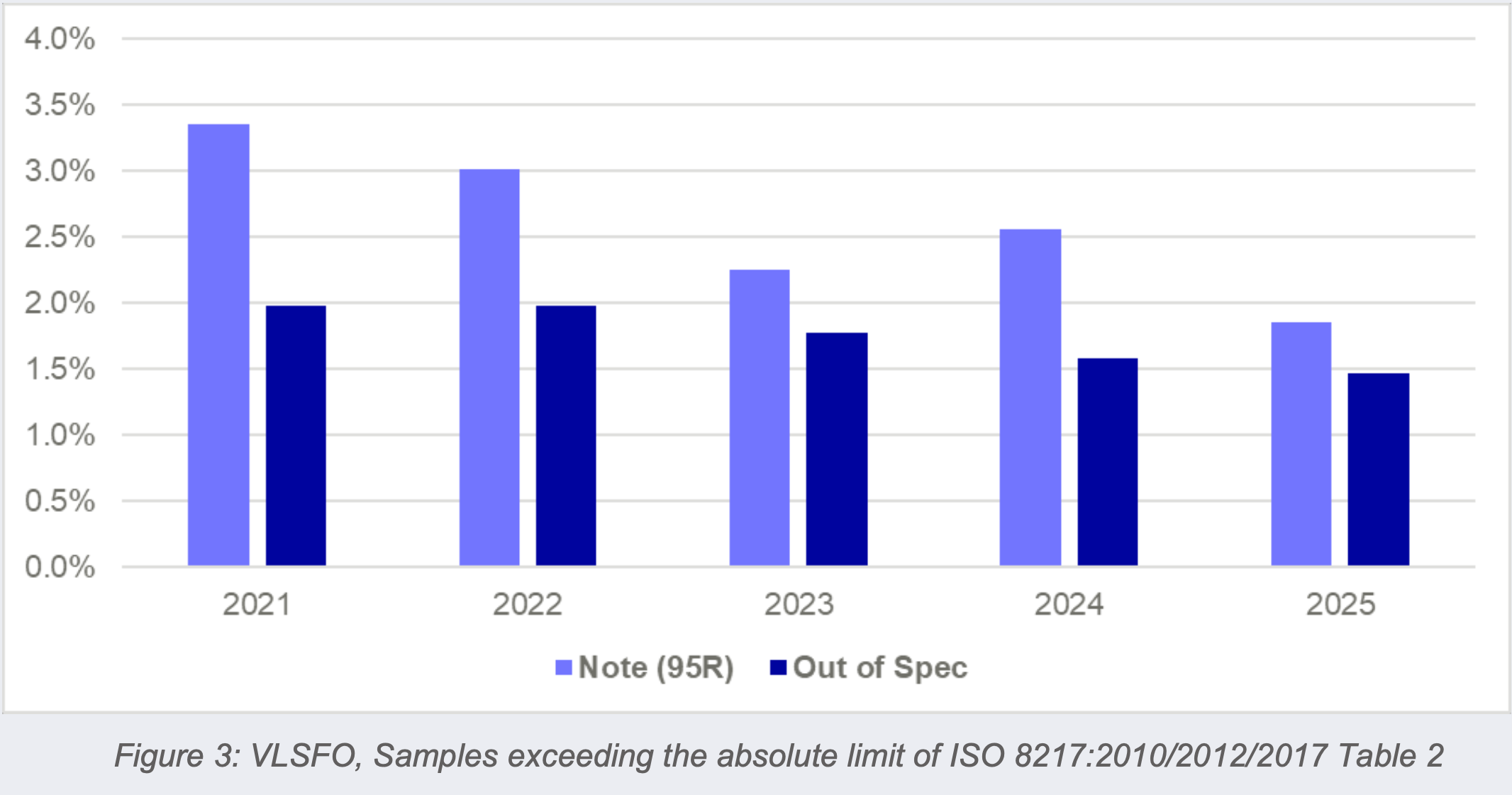
VLSFO
The proportion of VLSFO samples classified as out‑of‑spec has declined slightly compared to previous years. A more significant decrease is seen in number of samples falling within the 95% confidence interval, indicating improved overall consistency and reduced marginal non‑conformities compared with 2024. [Figure 3].
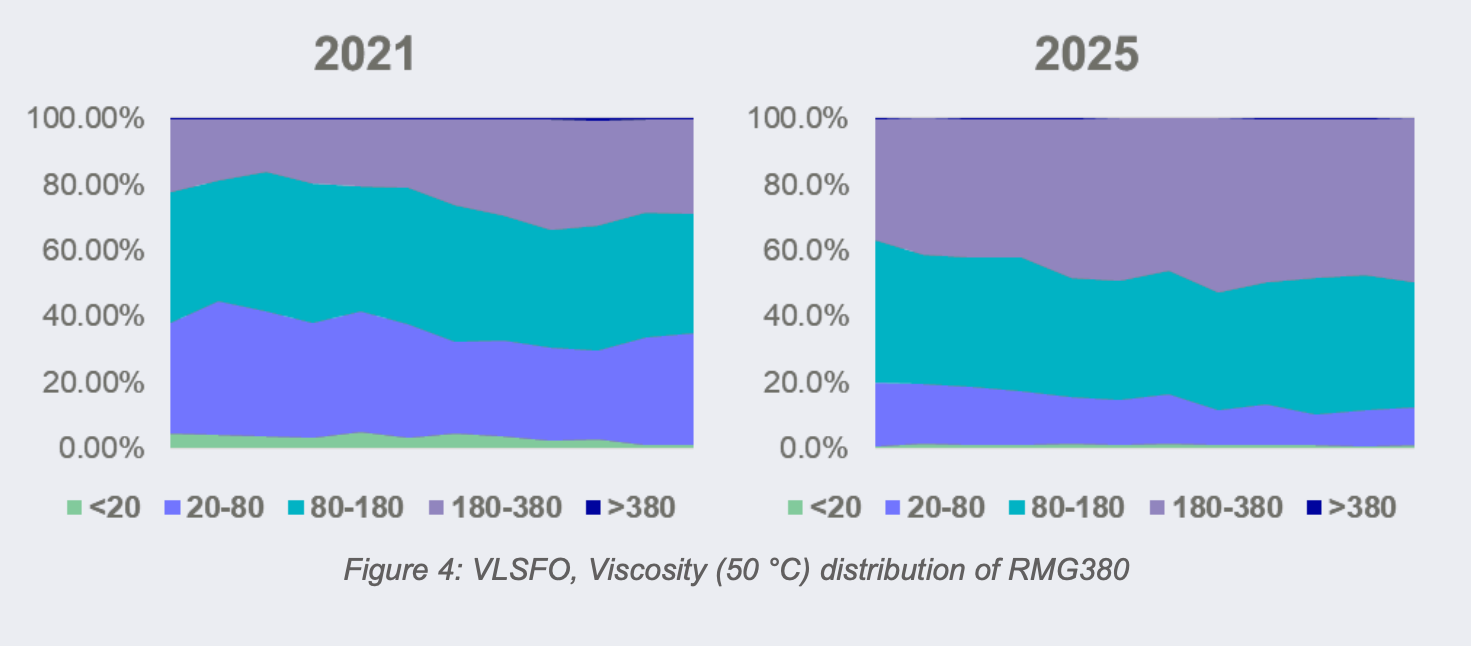
Viscosity trends
Since their introduction to the market in 2020, the VLSFOs have experienced a shift towards higher average viscosity @ 50 °C. This trend continued in 2025 [Figure 4].
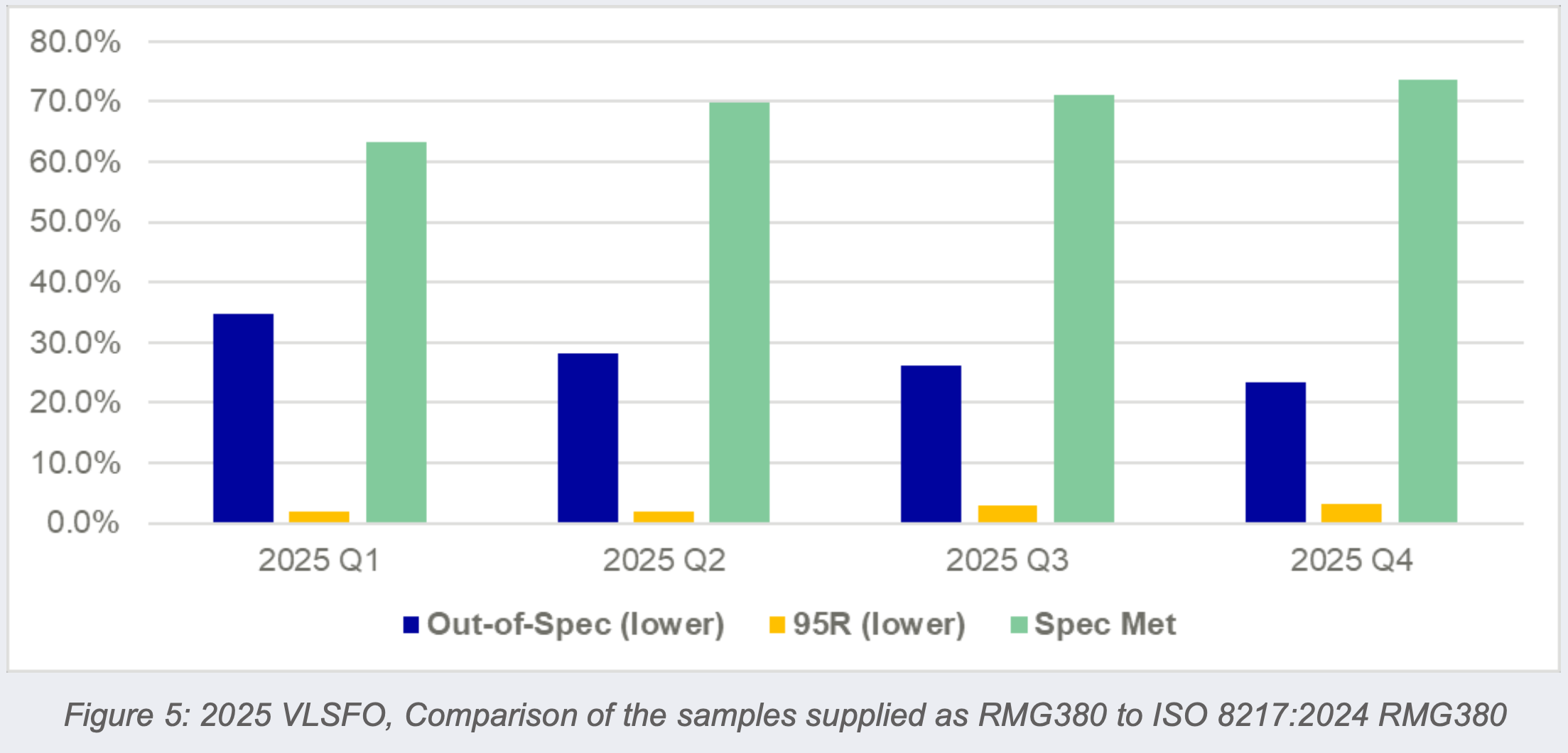
ISO 8217:2024’s introduction of minimum viscosity requirements represents one of the most significant changes, with a notable impact on fuels previously classified as RMG380 under the 2010/2012/2017 editions. In 2024, about 35% of the RMG380s would fall outside the ISO 8217:2024 minimum viscosity requirement. This portion had dropped to roughly 25% in 2025 [Figure 5].
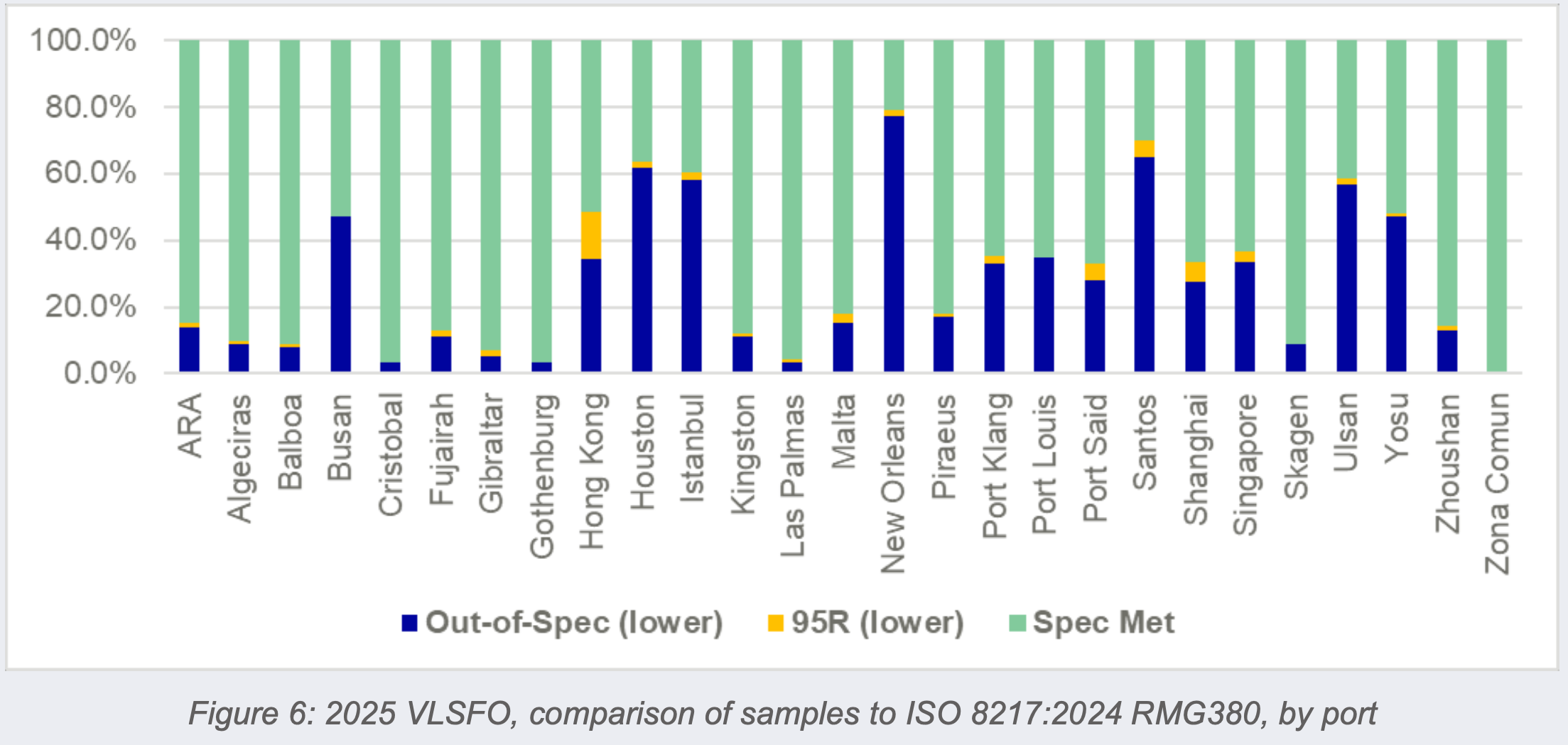
There are notable regional differences when it comes to how well fuels supplied today would meet the ISO 8217:2024 limits [Figure 6]. In major bunker ports such as Houston, Santos, New Orleans, Busan, approx. 65% would fail the ISO 8217:2024 RMG380 grade while in regions such as Zona Comun, Cristobal, Las Palmas majority would comply. The main reason that these fuels fail ISO 8217:2024 requirements is the minimum viscosity.
ULSFO
The proportion of out-of-spec ULSFO samples increased significantly in 2025. Notably, approximately 90% of ULSFO deliveries originate from European ports, with around 60% sourced from Mediterranean ports. [Figure 7].
HSFO
The portion of HSFO out-of-spec samples decreased in 2025 compared to 2024. A significant decrease can be seen in samples within the 95% confidence limit. [Figure 8]
Distillate fuel (DMA 0.10% sulphur)
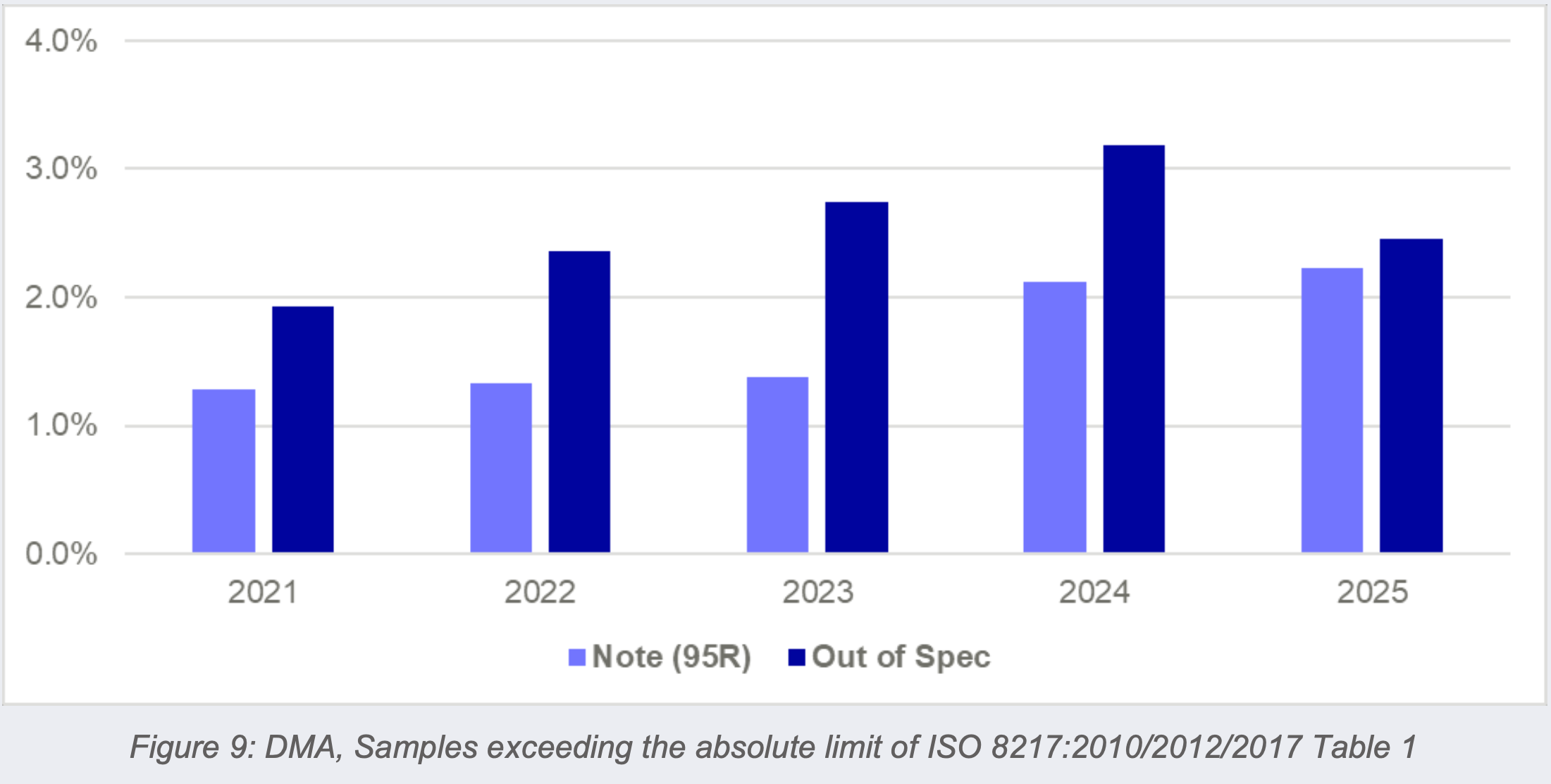
The proportion of out‑of‑spec DMA samples decreased compared to 2024, marking the end of the steady upward trend observed in recent years. In contrast, the share of samples falling within the 95% confidence limit continued its upward trajectory, although the increase in 2025 was relatively minor. [Figure 9].
Related: Bureau Veritas: VeriFuel Fuel Quality Testing Annual Report 2024
Photo credit: Bureau Veritas
Published: 13 February, 2026