International law firm Watson Farley & Williams (WFW) on Wednesday (4 March) published an article written by WFW Athens Partner Natalie Jackson and London Associate Iliana Mastoraki who provide an overview of the legal and commercial issues likely to arise associated with any closure of the Strait of Hormuz, from contractual considerations to force majeure:
Against a background of escalating geopolitical tensions in the Middle East, international law does not permit Iran to obstruct transit passage through an international strait such as the Strait of Hormuz (the “Strait”). Yet, the mere declaration of closure (let alone threats issued by Iran’s Islamic Revolutionary Guard Corps (“IRGC”)) has unsettled markets and disrupted shipping routes.
What was long-regarded as a dependable conduit of global trade has become a narrow passage burdened with immense consequences for the global shipping world which, once again, draws attention to the significant risks and disruption associated with a full closure of the Strait.
This article serves as a reminder to stakeholders of the legal and commercial issues likely to arise, as previously set out in detail in our WFW July 2025 article series covering contractual issues, force majeure and repudiation of contract, frustration and insurance implications.
Current state of affairs – is the Strait of Hormuz closed?
Whilst the Strait has not been legally closed, the IRGC has reportedly sent warnings via VHF that the Strait is shut down. The latest announcement (3 March) appears to be a comment from senior IRGC official Ebrahim Jabari stating: “The strait is closed. If anyone tries to pass, the heroes of the Revolutionary Guard and the regular navy will set those ships ablaze.” In the last 24 hours, at least three vessels have been confirmed to have been hit and/or attacked in the region. Despite no formal NAVAREA or IMO Safety Information, warnings or an imposition of an exclusion zone, the commercial intake, in practice, is that more and more vessels refrain from transiting the Strait. The Joint Maritime Information Centre (“JMIC”) has upgraded its regional risk assessment to ‘critical’ indicating that attacks are almost certain. Vessels have been advised by US Marad Maritime Alert 2026001A to avoid the region and proximity to US military vessels.
Relatedly, it is reported that Houthi officials have indicated that they will be targeting vessels in the Red Sea. With passages under threat, vessels will either be trapped or have to deviate through the Cape of Good Hope.
Summary of legal implications
Stakeholders will be looking out for daily updates from the relevant authorities and regulatory bodies including their insurers. In this respect, immediate charterparty concerns (discussed in detail here), are growing prevalent, including concerns around deviation and safe port considerations. The existence of any express liberty clause or an implied right to deviate for the safety of the vessel, crew and cargo and whether a deviation is ‘reasonable’ are all aspects which will require careful consideration. It should be noted however, that an unreasonable deviation may deprive the carrier of contractual rights and may result in P&I cover being lost. Parties are therefore advised to consult with their insurers along with all parties involved in the voyage before such decisions are made. Critically, owners should monitor the position carefully and record their reasoning to mitigate any exposure vis-à-vis allegations of unreasonable deviation.
Similarly, the question of whether parties may be able to successfully employ force majeure clauses in their charterparties or to rely on the legal doctrine of frustration, are all entirely pertinent.
Where BIMCO War Risks Clauses of 2025 for time and voyage charterparties have been incorporated, owners would, in principle, be entitled to rely on those provisions if transit through the Strait or operations in the surrounding region expose the vessel to war risks. In such circumstances, a refusal to comply with charterers’ employment orders may well be contractually justified. Read more on insurance-related considerations here.
The geopolitical situation is in flux and amidst the uncertainty, parties must be aware of their rights and obligations, the risks assumed or imposed and all the legal implications.
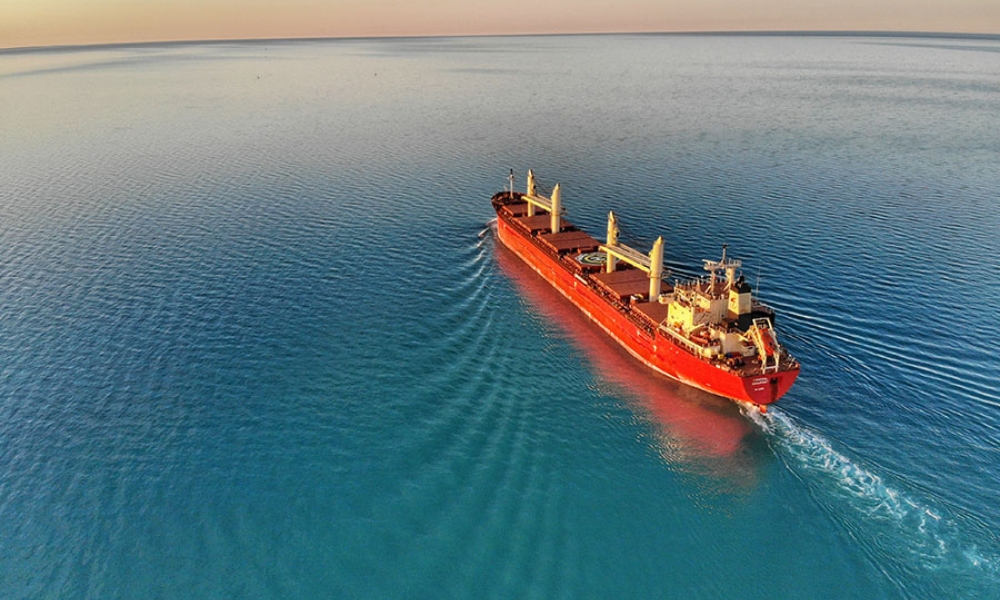
Photo credit: Chris Pagan on Unsplash
Published: 5 March, 2026